
The Appeal of Umami – The Importance of Savoring
September 2025
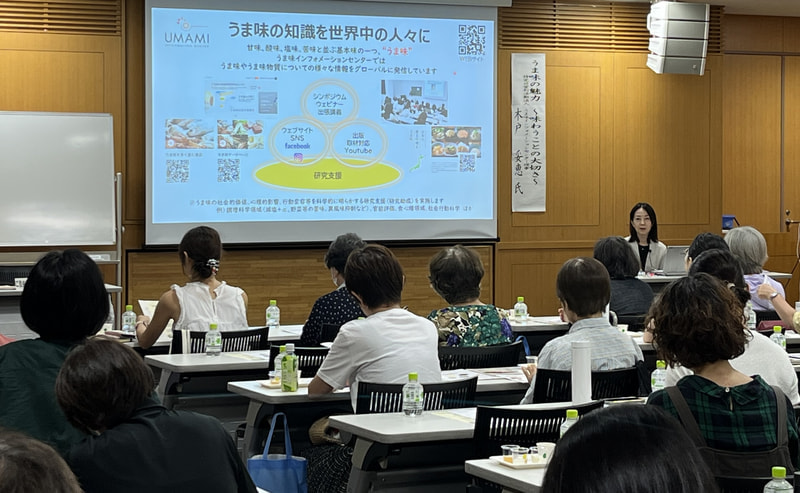
On September 11, 2025, the Umami Information Center (UIC) held a public lecture titled “The Appeal of Umami – The Importance of Savoring” at the Musashino City Municipal Musashino Shōkō Kaikan (a municipal commerce and industry hall). Following last year’s event, approximately 60 residents of Musashino City participated.
This lecture was part of a series organized by the Musashino City Consumer Life Center, titled “Musashino Consumer School: Living Kindly to Your Body.” The nine-session program includes talks by fermented seasoning manufacturers and consumer life consultants, as well as visits to local farms, with UIC responsible for one of the sessions. At the opening, Yuka Maruyama, Section Chief of the Consumer Affairs Division, Industrial Promotion Section, Citizens Department of Musashino City, expressed her hope: “By sharing scientifically grounded information on umami, we aim to raise interest in food and health and contribute to improving quality of life.” Her remarks seemed to reflect the local government’s expectations for umami.
The lecturer was UIC Director Yasue Kido. The session offered participants an opportunity to learn about umami while sampling dishes, providing practical tips for incorporating it into their daily diet.
Many foods contain umami substances, but umami is a more subtle taste compared to sweetness or saltiness. Therefore, it can only be perceived when you consciously pay attention to it. Once you become aware of it, you can start to distinguish differences such as “This dish has umami” or “This ingredient has little umami.” In the lecture, participants first experienced umami by chewing a piece of dried tomato thoroughly for about one minute without swallowing, allowing them to sense the umami present within the flavor of the ingredient.
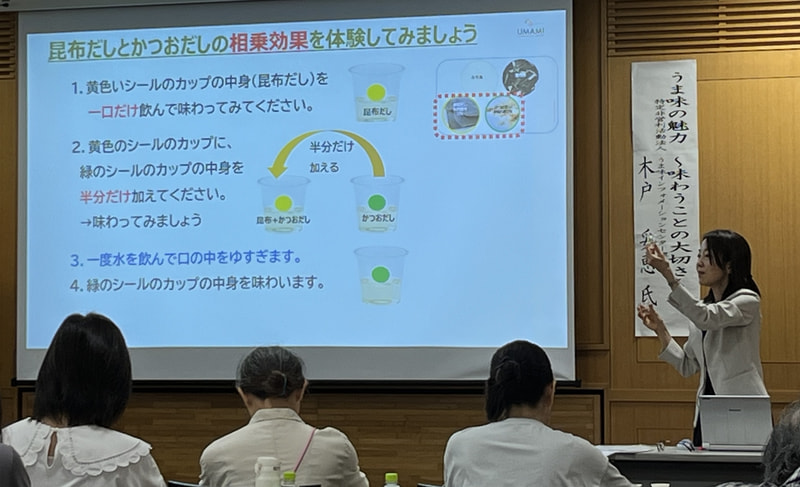
Next, participants experienced the synergy of umami by using kombu dashi and katsuobushi dashi. When the amino acid-based umami substance (monosodium glutamate) in kombu dashi is combined with the nucleotide-based umami substance (disodium inosinate) in katsuobushi dashi, the umami becomes seven to eight times stronger. When participants tasted the blended dashi, many expressed surprise, saying “The umami has intensified,” and in response to the lecturer’s question, “Did you feel the umami become stronger?” all hands went up.
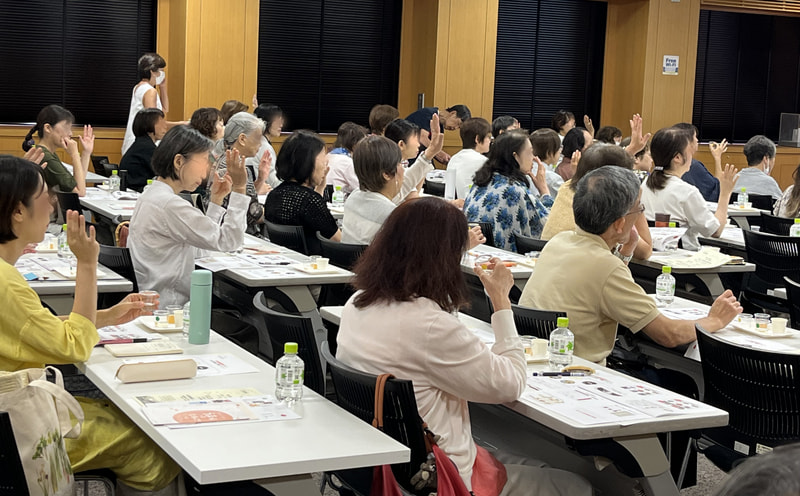
Furthermore, when blended dashi was added to a reduced-salt miso soup without any dashi, participants experienced how the flavor became richer and realized that “it’s possible to reduce salt while enhancing deliciousness.” Next, they tried a tasting that promotes saliva secretion using kombu water, which takes advantage of the function of umami substances. Through these experiences, participants clearly understood that skillfully utilizing umami can lead to a healthier diet. Their attentive note-taking, nodding in agreement, and enjoyment while savoring the flavors left a strong impression.
After the lecture, we received many comments through the survey, and we would like to share some of them.
• I discovered so many new things and insights. The talk was very easy to understand. I will definitely apply what I learned to my daily life.
• I was able to deepen my understanding of umami, and I can make use of it in my future eating habits. The scientific evidence was very convincing. I enjoyed the lecture while actually tasting the flavors.
• It was great to be able to taste and confirm each point one by one. I had never heard that kombu dashi is effective for dry mouth, so that was very helpful.
• I want to make good use of glutamate and maintain a low-salt diet. I look forward to enjoying umami.
We sincerely hope that all those who participated in this seminar will make the most of umami and enjoy a delicious and healthy diet.